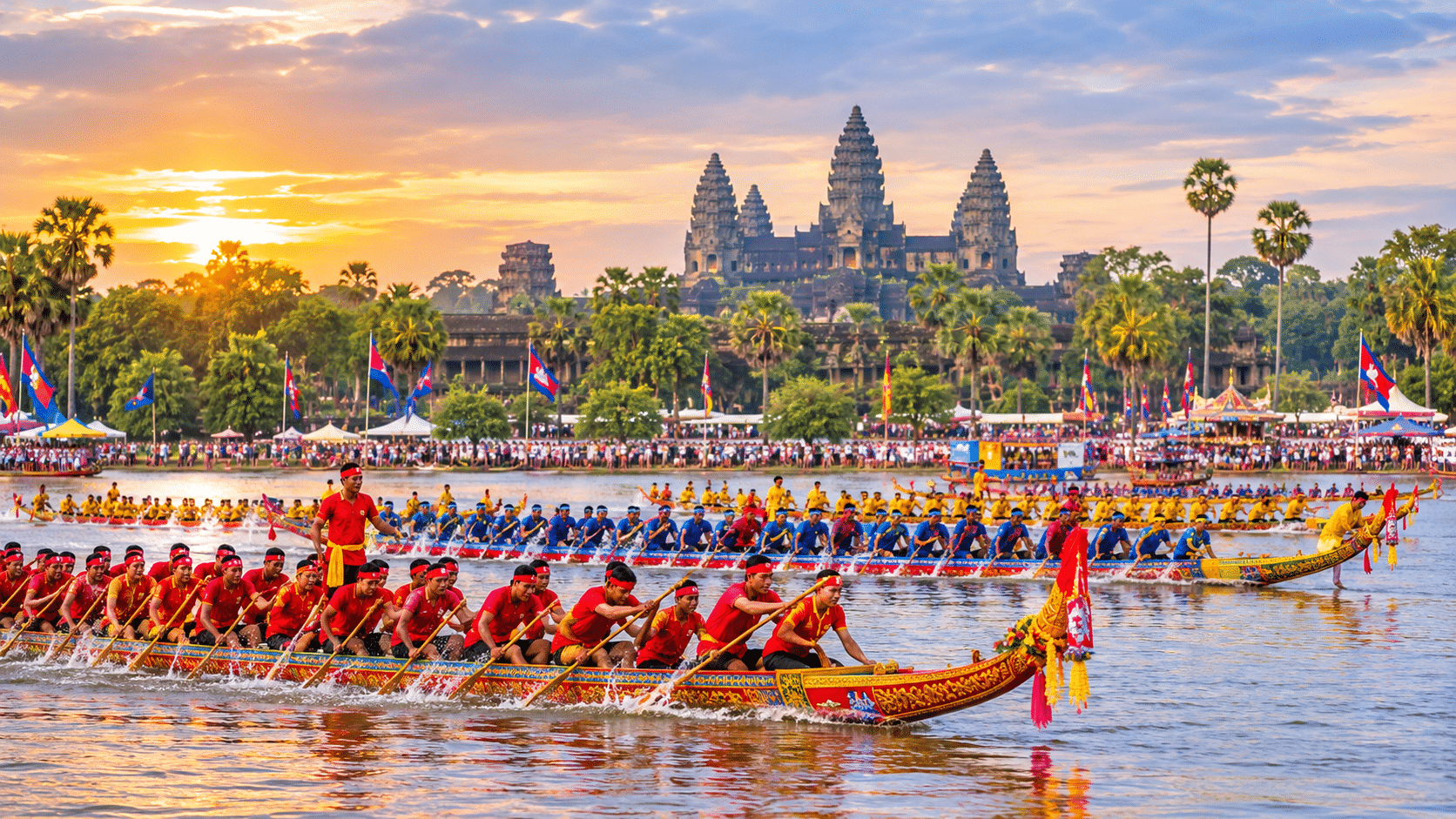
Imagine thousands of people gathering along a beautiful river, traditional longboats racing across the water, colorful decorations lighting up the night, and the sound of drums and cheering filling the air.
Welcome to Bon Om Touk (បុណ្យអុំទូក), Cambodia’s famous Khmer Water Festival.
Celebrated around the end of the rainy season, this traditional festival is one of Cambodia’s most important cultural events. It brings together people from different provinces to celebrate the country’s rivers, appreciate nature, honor traditional customs, and enjoy a special time with family and friends.
For international travelers, the Khmer Water Festival offers a wonderful opportunity to discover Cambodia beyond its famous temples. It provides a closer look at the country’s history, local traditions, community spirit, and everyday life.
If you are planning a journey through Cambodia, this is a cultural celebration worth learning about.
1. What Is the Khmer Water Festival?
The Khmer Water Festival, locally known as Bon Om Touk, is an annual Cambodian celebration traditionally held over three days around the full moon of the Khmer lunar month of Kadeuk, usually in October or November.
The festival celebrates the end of the rainy season and the remarkable seasonal reversal of the Tonle Sap River.
During the rainy season, the powerful flow of the Mekong River pushes water into the Tonle Sap River, causing it to flow backward into Tonle Sap Lake. As the dry season approaches and water levels change, the river reverses direction again, allowing water to flow from the lake back toward the Mekong.
This natural phenomenon plays an important role in Cambodia’s ecosystem, agriculture, fishing industry, and traditional way of life.
For generations, Cambodian communities have celebrated this relationship between water, nature, and prosperity.
The festival is famous for its traditional boat races, illuminated boats, cultural activities, and delicious Cambodian street food.
2. The History and Origins of Bon Om Touk
The history of the Khmer Water Festival is closely connected to Cambodia’s ancient civilization and its relationship with rivers.
One historical interpretation links the tradition to the Angkorian period, particularly the reign of King Jayavarman VII in the 12th century.
During the Angkor Empire, waterways were important for transportation, communication, trade, agriculture, and military activities. Traditional boat competitions are often associated with the training and preparation of royal naval forces.
Historical carvings at ancient Khmer temples, including Bayon and Banteay Chhmar, depict impressive naval scenes and battles, demonstrating the importance of boats and waterways in the history of the Khmer Empire.
Over time, boat racing developed into a major cultural celebration.
Today, Bon Om Touk is more than a sporting event. It represents national pride, gratitude for water, community unity, and the importance of Cambodia’s rivers.
3. Why Does the Tonle Sap River Flow Backward?
One of the most fascinating aspects of the Khmer Water Festival is the natural reversal of the Tonle Sap River.
This unusual hydrological phenomenon is closely connected to the seasonal monsoon rains and the Mekong River.
During the rainy season, typically from June to October, rainfall increases water levels throughout the Mekong River system.
As the Mekong rises, water flows backward through the Tonle Sap River and into Tonle Sap Lake. The lake expands dramatically, providing important seasonal habitats for fish and other wildlife.
When the rainy season ends, Mekong water levels decrease. The Tonle Sap River then changes direction again, allowing water to flow out of the lake and back toward the Mekong.
This seasonal cycle supports Cambodia’s rich freshwater ecosystem and provides essential resources for fishing and farming communities.
For Cambodian people, water is not simply a natural resource. It is deeply connected to food, livelihoods, traditions, and national identity.
That is why the reversal of the Tonle Sap River is such an important reason for celebrating Bon Om Touk.
4. The Most Exciting Activities During the Water Festival
The Khmer Water Festival is filled with exciting activities that attract both Cambodian residents and international visitors.
Traditional Longboat Racing
The highlight of Bon Om Touk is the traditional longboat competition.
Teams representing different provinces, communities, and organizations gather to compete in beautifully decorated racing boats.
Each boat can carry many rowers who work together to move through the water with incredible speed and coordination.
The atmosphere becomes especially exciting when competing teams approach the finish line. Spectators cheer, drums beat, and colorful flags wave along the riverbanks.
These races demonstrate teamwork, discipline, strength, and the importance of community traditions.
Illuminated Boat Parade
When evening arrives, the festival becomes even more beautiful.
Decorated and illuminated boats travel along the river, creating colorful reflections across the water.
These illuminated vessels, known as Loy Pratip, are an important visual feature of the celebration.
Many are decorated with lights and elaborate designs representing Cambodian institutions and cultural identity.
Visitors can enjoy the beautiful riverside atmosphere and experience another side of Cambodian festival traditions.
Fireworks and Evening Entertainment
Depending on the official festival program, evening celebrations may include fireworks, cultural performances, live music, and entertainment.
The riverside becomes a lively meeting place where families, friends, and travelers gather to enjoy the festive atmosphere.
Traditional Cambodian Food
No Cambodian celebration is complete without delicious local food.
During the Water Festival, visitors can discover a variety of Cambodian dishes and popular street snacks.
Some foods worth trying include:
- Nom Banh Chok: Traditional Cambodian rice noodles served with fresh vegetables and flavorful curry sauce.
- Bai Sach Chrouk: Grilled pork served with rice, a popular Cambodian breakfast.
- Num Ansom: Traditional sticky rice cake, often prepared for Cambodian festivals.
- Nom Krok: Small coconut rice cakes cooked in special round pans.
- Fresh tropical fruits: Mango, banana, coconut, pineapple, and other seasonal fruits.
Trying local food is one of the best ways to understand Cambodian culture and connect with local communities.
5. Ok Ambok and the Moon Festival
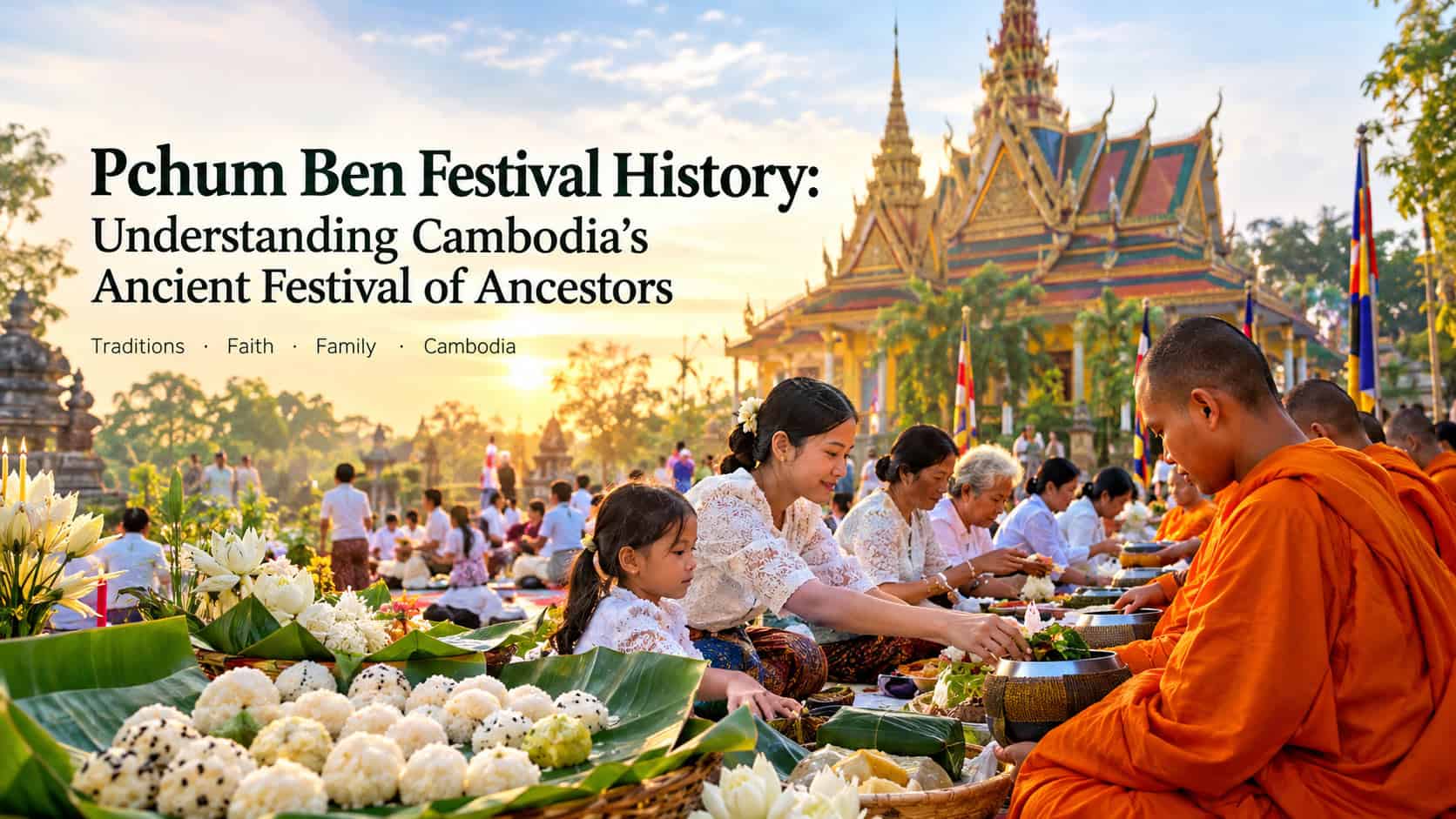
Bon Om Touk is closely associated with another traditional celebration known as Ok Ambok and the Moon Salutation ceremony.
Ok Ambok is a traditional Cambodian food made from roasted rice that is pounded flat.
During the celebration, families prepare and enjoy this special seasonal rice with ingredients such as banana and coconut.
The moon is also honored through a traditional ceremony known as Sampeah Preah Khae.
Families gather to pay respect to the moon and express gratitude for good fortune, happiness, and prosperity.
These traditions show that the Water Festival is not only about boat racing. It is also an important cultural and spiritual celebration connecting Cambodian people with nature and their agricultural heritage.
6. Where Is the Best Place to Experience the Khmer Water Festival?
Cambodia has many riverside communities with their own boat-racing traditions. However, Phnom Penh has traditionally been the main destination for the country’s largest Water Festival celebrations.
Phnom Penh – The Capital’s Riverside
The riverside area around Sisowath Quay, near the Royal Palace, has traditionally hosted the main boat races.
During major celebrations, visitors can experience the excitement of racing boats, local food stalls, traditional decorations, and large crowds.
The meeting point of the Tonle Sap, Mekong, and Bassac rivers also makes Phnom Penh an interesting place to understand Cambodia’s river system.
Siem Reap – Culture and Angkor Heritage
Siem Reap offers another opportunity to discover Cambodian traditions.
Although it is internationally famous for Angkor Wat, the surrounding communities also maintain important local cultural traditions.
Travelers visiting Siem Reap can combine cultural experiences with visits to ancient temples, local markets, traditional villages, and Tonle Sap Lake.
Local Water Festival activities and their schedules can vary each year.
Provincial Communities – A More Local Experience
Beyond the major tourist destinations, different Cambodian provinces have their own boat-racing traditions and community celebrations.
Experiencing a smaller local celebration can provide a more intimate perspective on Cambodian culture and community life.
Always check local event announcements before arranging your visit.
7. Best Time to Visit Cambodia for the Water Festival
The Khmer Water Festival usually takes place in October or November, depending on the Khmer lunar calendar.
This period also marks the transition from the rainy season toward the dry season.
Travelers can enjoy Cambodia’s countryside, discover local communities, and explore important cultural destinations during this time.
Some recommended destinations include:
- Phnom Penh: Explore the Royal Palace, National Museum, riverside, and local markets.
- Siem Reap: Discover Angkor Wat, Bayon Temple, Ta Prohm, and traditional Cambodian villages.
- Tonle Sap Lake: Learn about fishing communities and the importance of freshwater ecosystems.
- Kampong Thom: Explore rural landscapes and discover lesser-known Khmer heritage sites.
- Kampot: Enjoy peaceful countryside scenery, riverside landscapes, and local food.
If you want to experience Cambodia’s culture more deeply, consider allowing extra days to explore beyond the main tourist attractions.
8. Travel Tips for International Visitors
If you are planning to visit Cambodia during Bon Om Touk, a little preparation can make your experience more enjoyable.
Book accommodation early.
Major festival celebrations can attract large numbers of visitors. If Phnom Penh is hosting the main event, riverside accommodation may become especially popular.
Arrive early for boat races.
Popular viewing areas can become crowded. Arriving early gives you a better opportunity to find a comfortable viewing location.
Keep your belongings secure.
As with any large public celebration, be aware of your surroundings and keep valuables secure.
Respect local traditions.
The festival has cultural and historical significance. Dress respectfully when visiting temples and religious sites.
Try local food.
Explore Cambodian street food and traditional dishes to discover more about local culture.
Check official festival announcements.
Dates, schedules, venues, and public celebrations can change. Always confirm the latest arrangements before traveling.
9. Discover the Real Cambodia Beyond the Festivals
Cambodia is a country of fascinating contrasts.
From the magnificent temples of Angkor to peaceful countryside roads, floating villages, traditional markets, and welcoming local communities, there is much more to discover beyond the country’s famous attractions.
The Khmer Water Festival offers an excellent introduction to Cambodian culture, but the experience becomes even more meaningful when travelers explore the country at a slower pace.
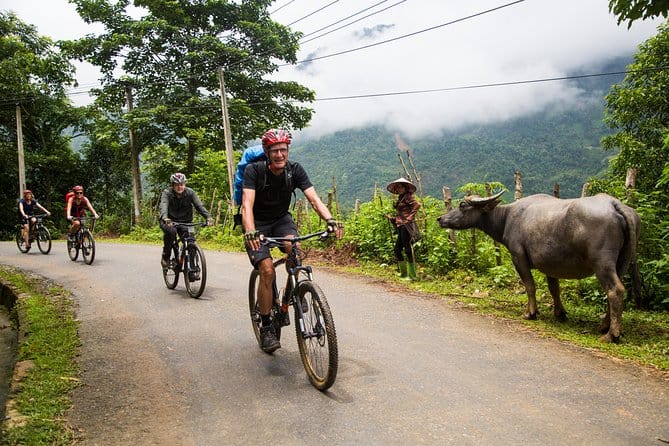
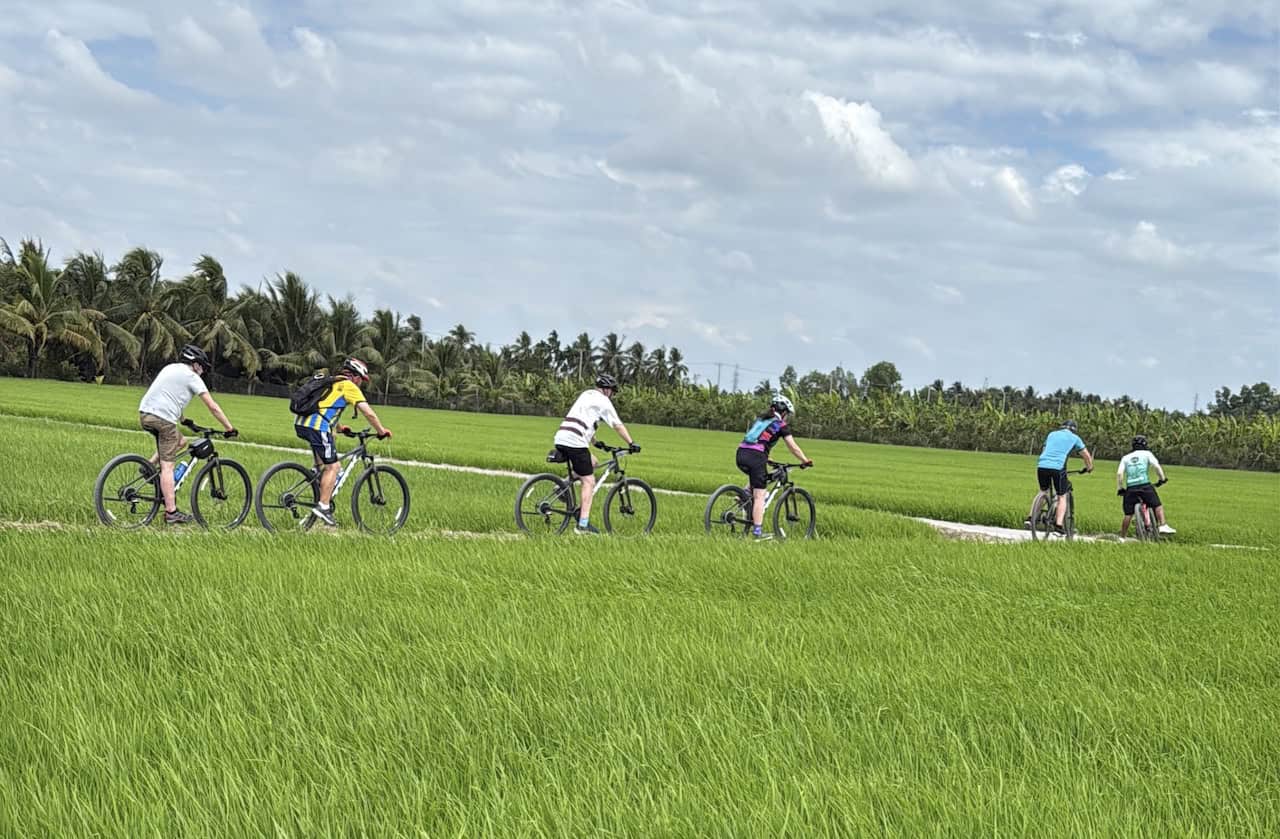
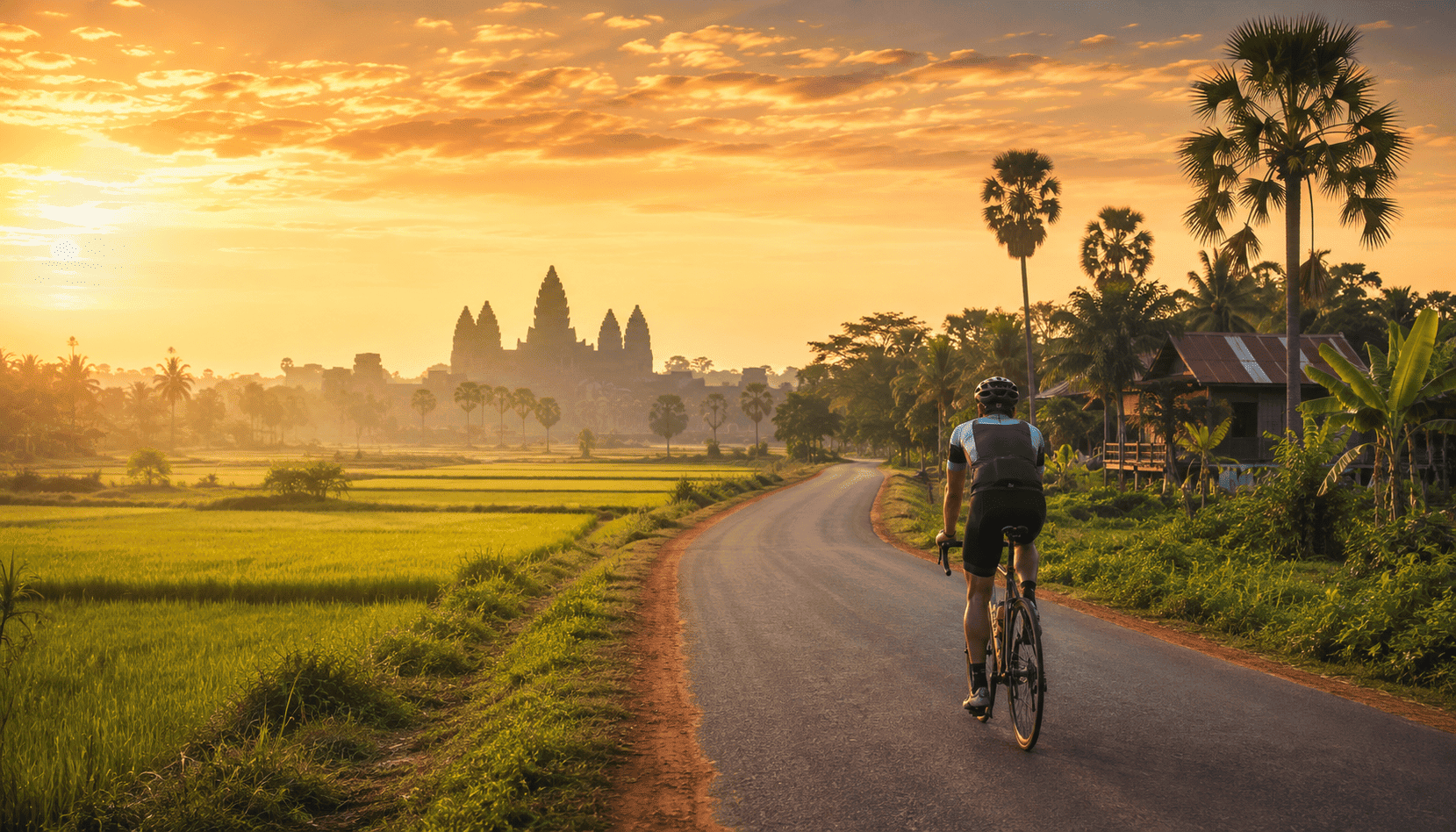
Imagine cycling through green rice fields, visiting traditional villages, meeting local families, tasting authentic Khmer food, and discovering beautiful landscapes along the Mekong River.
These experiences allow travelers to see Cambodia from a different perspective.
At Asia Backroad Adventure, we believe that travel should be about more than visiting famous destinations. It should be about connecting with local people, discovering authentic cultures, and creating meaningful memories.
Our local team designs cycling and adventure journeys that introduce travelers to the authentic beauty of Cambodia and Southeast Asia.
Whether you want to explore Angkor’s ancient heritage, experience the Cambodian countryside, or discover the Mekong region, we invite you to experience the journey with us.
10. Experience Cambodia with Asia Backroad Adventure
The Khmer Water Festival is a wonderful reminder of how deeply Cambodian culture is connected to nature, history, and community life.
From the excitement of traditional boat races to the beauty of illuminated riverside celebrations, Bon Om Touk offers international visitors an unforgettable cultural experience.
But Cambodia has many more stories waiting to be discovered.
Explore the country with Asia Backroad Adventure and experience its hidden roads, ancient heritage, traditional villages, and warm hospitality.
Discover Cambodia. Experience Local Culture. Explore Beyond the Ordinary.
Visit Asia Backroad Adventure and start planning your next adventure in Cambodia.
Frequently Asked Questions About the Khmer Water Festival
1. What is the Khmer Water Festival called in Khmer?
It is called Bon Om Touk (បុណ្យអុំទូក), which is commonly translated as the Cambodian Water Festival.
2. When is the Khmer Water Festival celebrated?
It usually takes place in October or November, around the full moon of the Khmer lunar month of Kadeuk. Exact dates change every year.
3. Why do Cambodians celebrate the Water Festival?
The festival celebrates the end of the rainy season and the reversal of the Tonle Sap River. It also recognizes the importance of water for Cambodian agriculture, fishing, and everyday life.
4. What are the main activities during Bon Om Touk?
Traditional longboat races are the main attraction. Other activities may include illuminated boat parades, moon ceremonies, fireworks, cultural performances, and traditional food celebrations.
5. Where is the main Water Festival celebrated?
Phnom Penh has traditionally hosted the largest national celebrations, especially along Sisowath Quay and the Tonle Sap River. Provincial communities also organize local activities.
6. Can international tourists attend the Water Festival?
Yes. International visitors are welcome to experience public festival activities when they are organized. Travelers should check the latest official announcements before visiting.
7. What is Ok Ambok?
Ok Ambok is a traditional Cambodian food made from roasted and flattened rice. It is traditionally enjoyed during the Water and Moon Festival period.
8. Is the Khmer Water Festival worth visiting?
Absolutely. It offers an opportunity to experience Cambodian traditions, local food, community celebrations, and the country’s unique relationship with its rivers.